Saturday, June 1, 2013

Vintage orange juicer

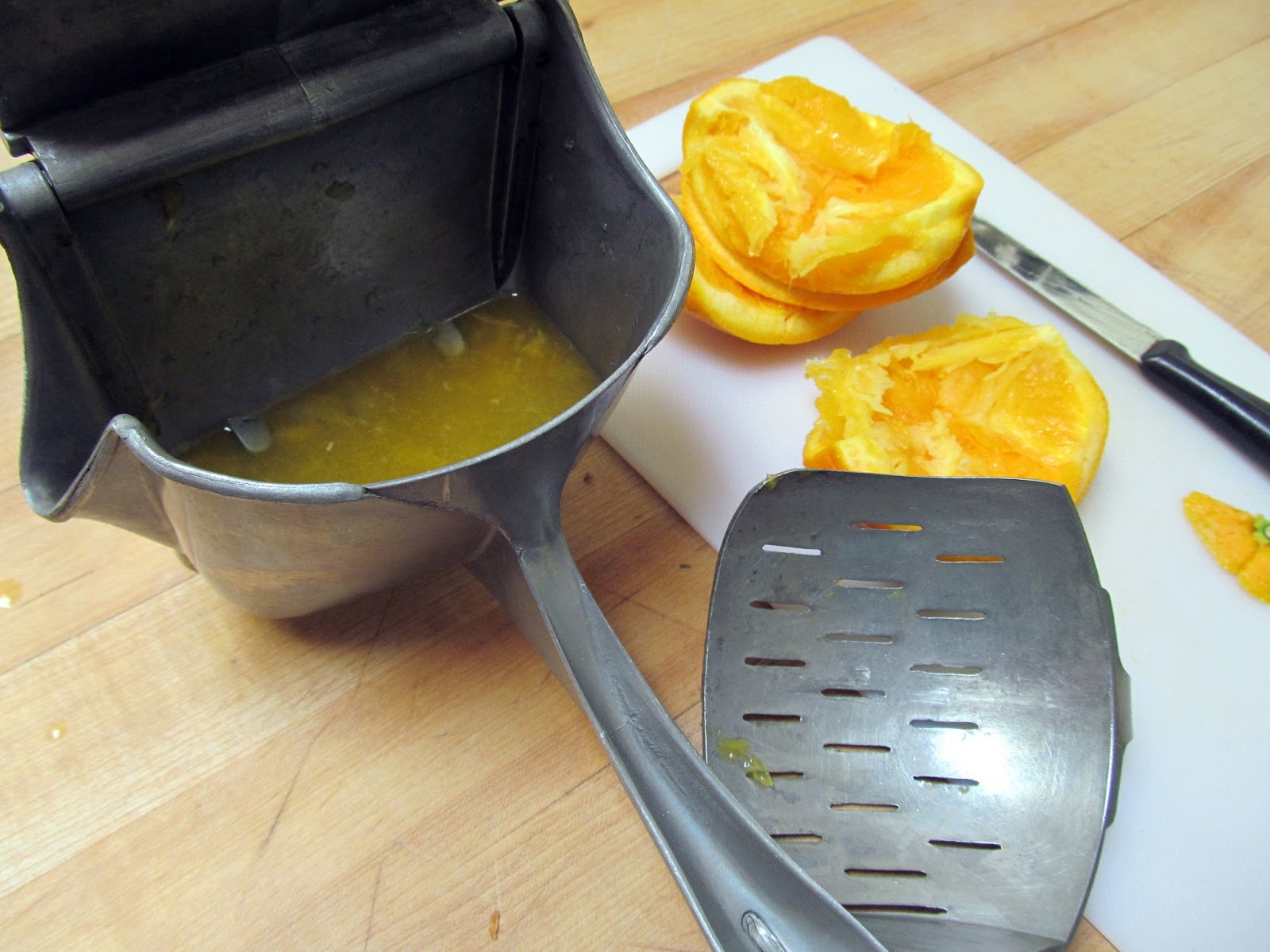
Actually, what more can I say?  It's a circa 1950s orange juicing device.  


It's also the most efficient orange juice I've ever used - and I've used a few in my day.  Very easy to squeeze and more importantly, it's super fast to clean.


first we slice the orange into quarters
place each quarter in the juicer and sqeeze

the juice is collected in a reservoir, as you can see when I remove the strainer
and there we go, one orange worth of juice.
Not much, I know, but it was really the wrong kind of orange for this.

Thursday, May 30, 2013

Coming home from camping


Moon rising above the camp kitchen.
Camping was a blast.  It was everything I remember it not being as a child. Well, except for the massive amounts of rain, I remember that from childhood camping.

I think the biggest difference for me was having proper home style food instead of rushed undercooked camp stuff and sugary snacks.  That and I had an absolutely awesome group of people to hang out with.
For the meals I followed pretty close to the original plan, only cutting down on the cooking on the first day.


Tending the sourdough starter by moonlight

There must have been something extra special in the air, because the sourdough starter I took camping with me became extra lively.  It had more of a sweet flavour than the sour flavour I get at home.  It made some fantastic pancakes and flatbreads.  Will be taking sourdough camping from now on.

instant coffee - neat idea, but not as good as homebrew

My friends camp kitchen.  It folds up nice and small, very efficient.

pancakes

pancakes and strawberries

Monday, May 20, 2013

Camping menu idea, or Will cook for ride share.

Camping, perhaps one of the weirdest things in the world.  People actually choose to sleep, away from home, in the wild, with a thin wall of cloth separating them from whatever rats or larger monsters lurk in the darkness.

But, then again, so long as I can bring along my trusty pots and pans, I can use it as an excuse to cook some very nice food for myself and others.

In fact, I got out my camping stoves the other day and started practicing cooking on it.


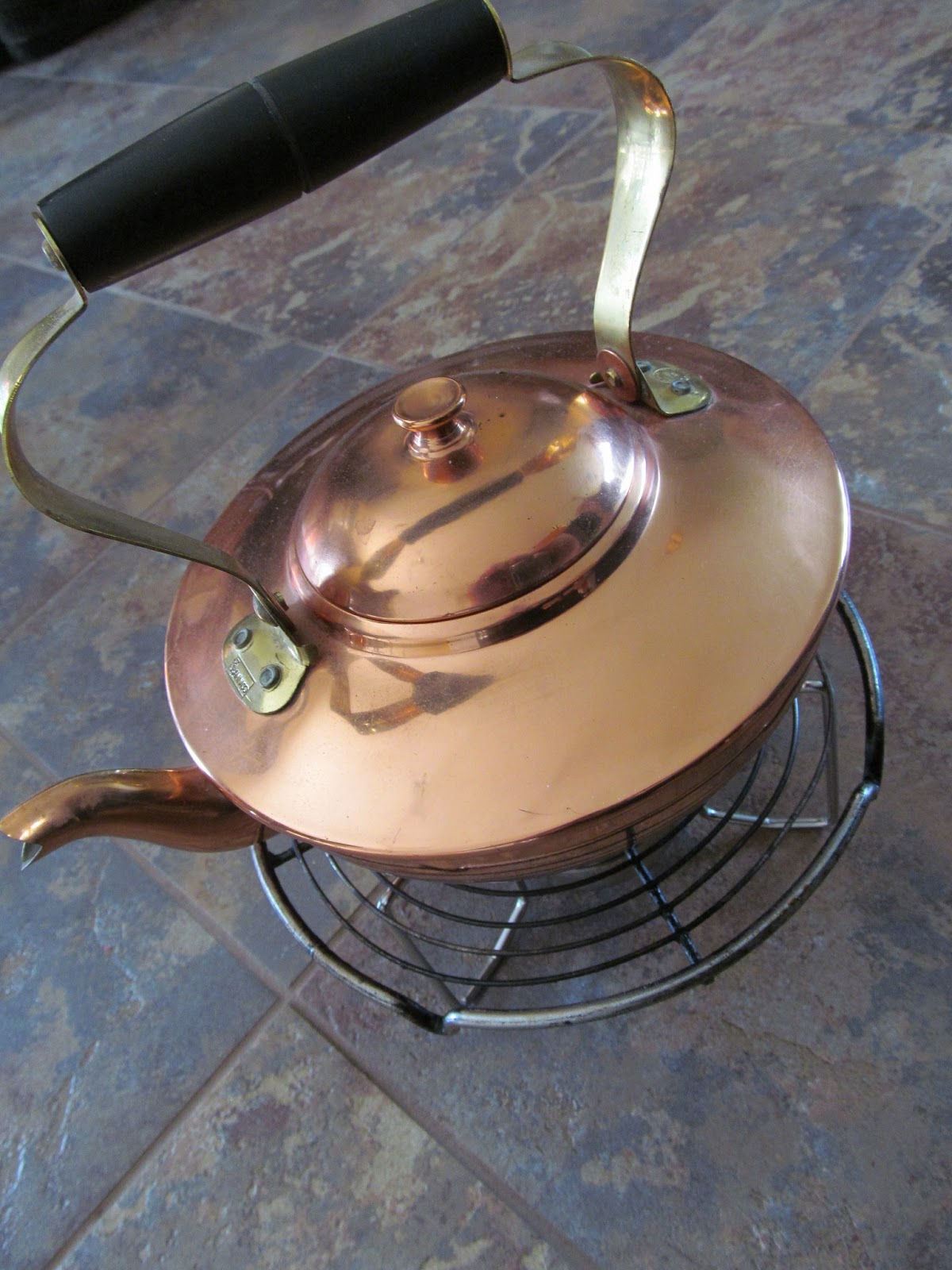
The first stove I'm brining is an alcohol stove for boiling water.


Basically the kettle is too small for the stove, so I used a metal trivet to stabilize it.  Should be good for boiling water for coffee  tea or doing the washing up.


I absolutely love this stove. It's a little butane stove, like the type you find in dorm rooms.  It has excellent temperature control and a very sturdy base, but I do wonder if it's going to be a bit too windy for it.


Other than it's a delight to cook with, the thing I like best about this stove is it has a lock/unlock feature for the butane gas canister.  Although pretty obvious when you think about it (it's the lever that has the words 'lock' and 'unlock' written beside it), most prying hands (of the child and adult variety) can't figure out how to turn on the stove when the gas is disengaged.  One canister lasts roughly 2 to 4 hours.  So, I figure one canister per day and one for luck ought to do it.


As for food, I'm hoping to keep the cooking simple, costs down but get the best results.

Here's my tentative menu work in progress at the moment.

Day one, drive up in the late afternoon


Snacks for dinner, probably onigiri (rice balls with filling) which are light but wholesome.  We will be tired from driving and setting up camp, so don't want to make anything too fancy.  Possibly BLTs instead.   Some grapes make nice car eating food.

I would love an idea for dessert once camp is set up, perhaps something with fruit.  Wonder if I can make a fruit crumble on the stovetop... (runs off to try it).

Day two, busy but relaxed


Breakfast: Sourdough pancakes with Strawberries in balsamic glaze.  Maybe a banana.

Price... about $1 per person for the pancakes, another $2 each for the toppings (I'm taking a small bag of organic flour instead of using my regular stuff, that ups the price quite a bit).  So, not the cheapest meal in the world, but easy enough to make.

Time - make the strawberries first, then heat griddle while mixing batter.  keep the pancakes covered with a towel as they come off the stove, and by that time, the strawberries should be ready.

Lunch: Ploughman's  sandwich.  Onion marmalade, cheese, lettuce,  butter and  bread.  Put some cold cuts and maybe a tomato or two on the side.

Price - about 20 cents each for the bread, another 5 cents for the onion, cheese is the main expense ... &c.  Probably $1.50 to $2 per plate.

Time - onions can be done in advance, but are better fresh and take about 30 min to make.  While the onions cook, I can assemble the rest of the ingredients and create a build your own sammie situation.

Or I could just do bread, cold cuts, cheese and veg, which is basically no cooking - and seems more and more likely at this point.

Dinner: Lamb Curry and flatbreads.  Really looking forward to this one, as it's one of my current favourite meal.  Add some cucumber salad for more veg and freshness.

price - 2 people only need about 1/4 lb meat.  so that's about a dollar, plus the tomats, potats, carrots, and onion, another 2 dollars.  Sauce, bread &c.  Cucumber salad, lets say a dollar.  About $5 or $2.50 per plate

Time- About an hour and a half.
Make the bread dough and leave to one side covered. Fry the onions while preparing the other veg.  add veg for a min to get them started, then brown the meat, add the sauce, add the tomats and wine/water, then let simmer.  After half an hour, roll out the flatbreads, remove curry from burner, heat griddle and cook flatbreads.  Wrap breads in towel to keep warm.  Put curry back on burner and bring up to boil.  Serve.

Day three, going home day

Breakfast, sigh same as yesterday.  Hope she doesn't mind terribly.  But I really hate breakfast as a rule, and this is about the only thing I feel like eating or cooking.

Lunch, cold cuts, bread, lettuce... basically any leftovers and some bread.

Snacks for the drive home.


Speaking of snacks.  I'm thinking scones or workman's cake (like a pound cake) make a good quick energy thing.  Apples, cured meats, crackers, &c.  That should be more than enough.

Emergency food: Broth Cubes.  Just add warm water (hot is better).  Makes an awesome start to all sorts of meals, like bread soup (broth, butter and bread - a thousand times tastier than it sounds.).  Also a good chunk of bacon - It's home cured and extra smoked, so it's quite shelf stable.  I'll probably pack it frozen in one big chunk though, just in case.

My goal was to minimize the amount of stuff I need to keep cool (finish it up by the end of Day 2), as most of the cold cuts I hope to bring are shelf stable at room temperature for a few weeks.


So... if you were going camping, would you enjoy this menu?  Or more to the point, would you enjoy having someone else cook this for you?   I know it's not hotdogs and marshmallows  but it is good wholesome food that I enjoy making.


Friday, May 17, 2013

Pasta Day - Japanese noodle soup


Japanese noodles (dry udon I think) with dashi broth, ume pickled plums, green onions and spicy sprinkles.

Probably not the most impressive pasta dish in the world, but excellent for soothing an upset stomach.

I used Kombu Dashi which has no fish in it (basically you simmer some seaweed), so this version of noodle soup is vegan friendly.  Probably the most expensive part of this dish is the ume at about $1.25 each, but it wouldn't be any good without it. All the other ingredients come in at under a quarter, so in total, $2.75 per bowl.  Not the most affordable, but for how calming this is on the tummy, well worth it.

Tuesday, April 30, 2013

Mutton Bacon: that's right, you heard me, I made bacon from a sheep - here's the recipe

I don't know if it can be rightly called bacon in the purest use of the word.  Bacon is made from pork.  But this cured and smoked mutton belly is to me far more tasty than any bacon I've ever consumed.

Even though I've been working with wool for a long time now, it's only recently I started thinking of sheep as a sources of food.  Locally, lamb is a very expensive meat, and very limited. There are lamb legs, lam ribs and lamb chops... and nothing else.  One would imagine there is more to a lamb than two legs and some chops.  Mutton is unheard of here, not even considered fit for pet food.  This is a shame.

Traditionally, sheep have been a major meat source in Europe  the Middle East, and North Africa.  England especially has a long history of wool and mutton.  The more I read about history, the more I want to cook what I read about.  I wanted to experience mutton.  And when I finally did, I found I liked it.  I like it a lot.  When prepared right (and by prepared I don't just refer to how it's cooked, how the animal is butchered and slaughtered have a large effect on taste and tenderness) it is exceptionally tasty.

As I mentioned, I butchered a ram not long ago.  There is a lot of meat on an adult sheep, and many cuts I don't know what to do with.  The belly had layers of meat and fat, and I didn't want it to go to waste.  Why not make bacon from mutton?  So that's what I did.

I used the Basic Dry Cure mix from the book Charcuterie: The Craft of Salting, Smoking, and Curing as a base for my mutton bacon.  It's been reproduced so many other places that I'm feeling okay to post it here as well.  You need to know that this book is a fantastic source of information and a great starting place for curing your own meat.

Basic dry cure

1lb kosher salt
8oz sugar
2oz pink salt (cure #1)

Mixed all together really well, label, and store away from children and foolish people who might eat it accidentally.


Mutton Bacon

For this recipe, I'm assuming you have some basic curing experiences   If not, try making regular bacon first.  If at any point the meat smells rotten, has fuzzy or black mould on it, then toss it out and start again.  if it gets a white mould on it, it's okay, but if the white mould is fuzzy then that's bad.

1 kilo mutton belly
1/4 cup basic dry cure
2 bay leaves (ground)
1 tsp each rosemary, thyme, juniper berries, pepper (dry and ground)
1/4 cup salt (on later reflection, I would leave this out next time)


  • Mix the cure together with the spices and extra salt.  Coat the mutton in the cure, and place in a ziplock bag with any remaining salt-mix.  Keep in fridge for about 7 days, massage the spices into the meat through the plastic daily.  Should feel firm.
  • Rinse the salt off and leave the meat to dry for at least an hour, uncovered in the fridge.
  • At this stage you can hang to dry in a cool place for 1 to 3 weeks, or you can smoke it.  I hot smoked mine with pear wood for 4 hours, then increased the temperature to make certain the internal temp of the meat was 140F or higher.   You can store the smoked meat in the fridge for a few weeks, or freeze it.
  • Which ever you choose, it tastes better for resting a day or two before slicing and frying or using the bacon in recipes.  If it's too salty, then boil the bacon for about 30 seconds before frying.  This is not an eat raw meat.
After the curing and drying, I divided my mutton bacon in three parts.  1 part I hung to dry in my curing chamber, the other two parts I smoked.  After smoking, half went in the freezer for later, and half went in the curing chamber to dry.  


I fried up a bit the day I smoked it and it's exceptionally yummy.  I'm very curious what the dried bacon will be like, as I've never tried this technique before.

The extra 1/4 cup of salt I used in this recipe may be optional.  I just felt more comfortable using more salt because I intended to hang it.  If you are just sticking it in the fridge after smoking, then you may not want to add this extra salt.  but then again, the flavour wasn't anywhere near as salty as I expected, so I leave it up to you.


Update:  Of the three methods I used to make this - hung cured, cured and smoked then hung, and cured and smoked and put directly in the fridge when cool - I liked the third best.  The first method of just cured and hung to dry developed some rather dodgy mold after a few days, so I tossed it.  The one that was smoked, then hung to dry was okay, but I suspect the temperature wasn't even enough during the drying.  If I had better temperature control, I think this would be my favourite method.

Affordable cooking? - can be, especially if you are butchering your own side or whole mutton.  Mutton use to be a very economical meat, but these days it's hard to come by.  This is a cut that is usually discarded, or sold for making lard.  Finding mutton belly, or whatever they call it these days can be very difficult and therefore expensive if you go to the wrong place.

Allergy friendly?  I think so.  You can adjust what spices you use, and it can be made without the Pink Salt (but you need to be more careful with meat safety and it won't have that rosy colour, but it can be done)