Wednesday, September 11, 2013

Medieval Ginger Bread Recipe

It's funny.  When I imagine gingerbread, I think of a sweet, hard cake or cookie like substance, shaped as cute little people, houses, rounds, with icing and colourful candy.  The thing I don't think about when people say the word gingerbread, is... bread.

But that's exactly what gingerbread was in the middle ages: Ginger Bread.  That's two words, not one, to indicate that literally, there is ginger, there is bread and they get combined somehow.

Reading the book Pleyn Delite, by Constance Hieatt and Sharon Butler, I came across a delicious looking gingerbread recipe from the Middle Ages.  This book contains all sorts of recipes from historical sources, including a lot of the recipes in the original text, and the modern day translation.  What I love best about this book is that the authors actually cooked a lot of these recipes.  I suspect that this is not the norm when translating historic cooking techniques into modern methods.  But these two have done a really good job of it.

I've tasted a few dishes cooked from the Pleyn Delite (which I say in my head as Plain Delight) and loved most of them.  This gingerbread, I didn't love as much.  I found it too crunchy, but I'm in the minority on this one.  Everyone else has gobbled it down, making me fend them off with a fork and a cunning plan to have enough left over for the photograph.

I suspect their plan was to finish it off quickly so that I would be forced to make a second batch if I wanted to take any pictures for the blog.

Before I write the recipe for medieval gingerbread, I feel compelled to confess that not much is changed from the version in Pleyne Delite, except maybe the quantities of the spices and wording.  It's a difficult recipe to improve on.  I would change a bit of the method if given a second chance to make this - which I may just be strong armed into doing.

Medieval Ginger Bread

Bread crumbs - about a 1 lb loaf of bread dried and finely ground
a generous teaspoon of ginger powder
a generous pinch of cinnamon
a dash of ground pepper or a pinch of Poudre Forte
1/2 cup of honey


  • In a large pan, bring honey to boil, remove from heat.  Add the spices and stir well.
  • Add the bread to the honey a little at a time, return to medium low heat if needed, stirring well after each handful of breadcrumbs.  When the mixture is really thick and hard to stir, turn out onto a layer of parchment paper.  spread it out evenly as best you can, then put another layer of parchment paper on top.  Use your hands or rolling pin to smooth out the gingerbread to make it as even and as thin/thick as you like.  Thinner is better in my opinion. 
  • Leave covered to cool for about an hour, cut into shapes.  You want to do this today and not a few days from now, trust me.  It gets more difficult as it ages.


This keeps well at room temperature for several days and travels well in a bento box, just wrap with a bit of parchment paper and you are good to go.


Affordable cooking? - Very much so, provided you use bread that would have gone to the chickens/garbage otherwise.  Not so much if you are buying bread or bread crumbs just for this recipe.  

Cooking for your Vegan friends? - It can be made vegan friendly by replacing the honey with a different liquid sweetener.  


Cooking for Allergies - not many allergies here at first glance, but it's good to be careful about the ingredients of the bread crumbs (commercially made usually contain soy and other problems), spices (sometimes processed with oils or lecithin which can include soy).  Just remember that your ingredients these days, have ingredients lists of their own.  With that in mind, this is a very flexible recipe.  You can choose any kind of bread, be it gluten free, yeast free, whatever you  need.


Monday, September 9, 2013

Iron Age Cooking - A day with Project Germani

I had the good fortune to spend a day with Project Germani.  They are a small but growing group of people who enjoy demonstrating what it was like to live in the Iron Age.

Most of the members are high school students who are still getting use to the idea of cooking for a group.  So they asked me to come along and help them do some cooking.


Together we made oatcakes, always a yummy and popular treat.  Then we had a look in the cooler which was full of an interesting, albeit eclectic, selection of foods.  There were lentils and pot barley, but also mustard and ketchup, radishes and kale.  I felt like being thrown into an episode of Chopped with no access to pantry and fridge.

With no real plan, we set to work soaking the barley.  Without any meat to include in the stew, we decided to toss in the lentils too.  As we were feeding a bunch of teenage boys, we definitely needed the extra protein from the lentils.  Protein and fat help them feel full, and the carbs from the barley help give them long term energy.

Once the lentils and barley were soaked for an hour or so, we par-boiled them in a pot over the fire.  Drained the water, and added chicken broth, turnips, beet, some butter, and a bit of salt.  Let simmer over the fire until the root veg were tender, adding more broth as needed.  Then it was time to make some greens.

Got some people cutting up greens, which included the kale, and the radish tops, and an impressively large amount of parsley.  Cooked it in butter, stirring frequently until wilted enough.   Served it on top of the stew.  Yummy!

I say 'we' but really it was them that did the work.  I just sort of asked questions about what they wanted, and suggested the method that would work best with the ingredients and cooking facilities.  They did a fantastic job!  It also turned out to be a much healthier meal than I expected from teenagers.  Well done guys!

It was great fun hanging out with them and learning about what life was like two thousand years ago.  My favourite part was learning about the different tools, especially the knives, they used during that time.  This also seems to be a time when there was a lot of interaction between cultures, which is always exciting.  Not just because they traded/acquired forcefully tools and objects, but also the more subtle exchange of culinary traditions, movements of ingredients between cultures, and how it affects the cooking and agriculture practices of the different peoples.  It's very different than the time I've spent in the 14th Century when the culture in Europe was far more uniform.

Saturday, September 7, 2013

14th century cooking: Caudle of Almonds Recipe

Caudle of Almonds is a kind of medieval almond milk made with wine or ale.  According to Peter Brears book, Cooking and Dining in Medieval England, it was considered especially good for people with a dodgy tummy.

Cooking with and drinking almond milk was a frequent occurrence during the 14th Century.  Not only was it considered a healthy milk substitute, in the middle ages there were many days in the Christian calendar that forbid the consumption of dairy products.  Isn't it nice that almonds don't come from a cow?

I suspect almond milk may have become more popular as the populations in cities increased during the 13th and 14th century.  Suddenly you have all these people living in close quarters, with most of the dairy products being shipped in from the countryside or from cattle being raised in close quarters in town.  Cows living in small yards, with no access to fresh grass, can lead to some milk borne illnesses...unhealthy cow creates inferior milk.  So, if you can afford almonds, you make almond milk.

Now, quite frankly I strongly dislike almond milk.  It doesn't taste like almonds and it doesn't taste like milk... it tastes like powered over sweetened chalk in water.  But that's the almond milk out of a box from the supermarket... Since I'm doing a lot more medieval cooking these days, I decided it was time to try making my own almond milk.  Since I'm a coward at heart, I decided to try the more flashy version of almond milk:

Caudle of Almonds

Inspired heavily by Cooking and dining in Medieval England, by Peter Brears, with a few changes of my own.

A pint of white wine or wine and water mixed
a large handful of almonds  (I used raw)
Honey to taste (or for vegan version, a different liquid sweetener)
Poudre Forte or you could just use cinnamon and/or nutmeg mixed.


  • Bring the wine to a boil, take off the heat and add almonds, about half a teaspoon of honey, and a generous pinch of spice.  Leave to steep for an hour or so to cool.  
  • Take the almonds out (keep the liquid) and smash them good.  Mortar and pestle is fine, or use the blitzer.  The aim is a fine mush.  Add the liquid back to the almonds and pound or mash again - this is the tricky part for me.  apparently my blitzer does not fit a full pint of liquid and makes a huge mess all over the kitchen when I ask it to try just this once.  Also the blades aren't sharp enough to mash the almonds fine enough.  So I did about half way in the blitzer then transferred small batches to work in the mortar.  
  • Strain the milk through a fine sieve or cheesecloth. Flavour with more honey and spices if needed, and sprinkle a few spices on top.

I loved how this tasted!   I cannot tell you how different this Caudle of Almonds was to boxed almond milk without falling into a huge pit of cliches - It's not even the same planet, worlds apart!  And I don't think it's just that this was made with wine, wine is lovely and all, but it was the pure almond-ness quality, the almond milk qua almond, that made is delightful.  

The Caudle of almonds also helped settle my stomach.  I had a very stressful day and my stomach was acidic and full on reflux.  I drank it warm with some extra honey, but I don't think I boiled off the alcohol from the wine, as I was quite sloshed after drinking a pint of Caudle.  Very delicious and I can see making this again soon. Just need to find a better method for creaming the almonds.  Got an idea brewing for that though...

Vegan friendly? - you need to substitute the honey with your favourite sweetener for this to be vegan friendly.  It's easy enough to do, so I am going to give it a qualified yes.

Affordable? - um... depends.  If you are like me and do not trust the bulk food bin and have to special order almonds from a place that doesn't mix nuts, no it is not even a little bit affordable.  But as far as normal people go, it's probably okay on price.

Allergy issues - depending on your allergy it can be a friendly or feendish drink. 

See my affordable section above about mixed nut contamination which a lot of people who don't have nut allergies in the family aren't use to taking into account, and not suitable for people with allergies to almonds.  Some people may have reactions to the sulphates (assuming you are using a commercial wine) in the wine.

However, it makes a great substitute for milk and is excellent substitute for warm-milk-before-bed drinks like horlicks.  


Friday, September 6, 2013

Pasta Day - Garlic pasta with garden fresh salad


Garlic pasta is basically noodles, garlic lightly fried in butter and cheese.  The salad is cucumbers and tomatoes from the garde, with a few balls of mini motza (bocconcini?), sprinkle of salt and a generous helping of olive oil.

I think that I would like to start posting (and therefore taking photos of) my Friday pasta meals.  I think it would inspire me to make more beautiful food and explore a greater variety of pasta sauces.

Kitchen Failure - homebrew beer from a tin and a digression into a Pastafarian world view

Perhaps it is true what they say, alcohol leads to spiritual contemplation.  A failed attempt to brew beer at home, has lead to some...sigh, well...the blog title suggests there will be occasional jaunts into the more religious aspects of the kitchen... feel free to skip this one if you aren't in the mood for...um...this...

Here is where I dress myself in full pirate regalia, eyepatch included, for it was said that one shall not discuss the details of the religion of the Flying Spaghetti Monster unless one is dressed in the Holy Garb.

Pastafarian literature tells us that there is a heaven, and in heaven there is a beer volcano.  An unlimited supply of beer is all well and good, but an actual volcano?  Call me...um... call me someone who doesn't follow the dogma of a religion to it's extreme, but I don't imagine how a volcano that spews unlimited amounts of liquid brew into the eternal resting place of my soul, would be a good thing.  I know, I know, heaven isn't suppose to be logical, but wouldn't an unending flow of beer eventually fill up heaven?  I mean, how can we drink enough to prevent the constant deluge from becoming a flood, when we are dead?

The Whole Wheat approach to the subject of beer is a bit different.  We love the idea of drinking beer on Fridays, the holy day of those who follow the teachings of the Flying Spaghetti Monster.  Beer goes great with pasta and many other things.  But maybe, the volcano of beer is a metaphor for how to live our lives better in this world. 


The Whole Wheat Pastafarian looks at beer much the way we look at food, only with more importance.

  The Flying Spaghetti Monster created the world in which we live in, and being a deity that resembles food (or that we have a food that resembles the divine), the Whole Wheat Pastafarian believes that this is a sign from his divine noodliness that it is our duty in life to create the best foodstuff that we possibly can.  Be this cooking at home, or growing the best ingredients, whatever our path in life, the Whole Wheat Pastafarian holds sacred the creation of food, not just for today, but we also believe that it is our duty to keep the world as healthy as possible so that future generations can also enjoy the same, or better, dietary connection to the divine that we feel every day.  Some may say that it's not much different than the bread and wine that Christian followers believe.  In fact I've seen some of the more evangelical members of the Church of the Flying Spaghetti Monster may go much further than that, but they are, um, more extreme in their religious view.  The Whole Wheat Pastafarian would never go that far, as moderation is the key to keeping a healthy diet, healthy soil and healthy relationships with others.

To create healthy food, we need to create a healthy food source.  Good tasting food that nourishes the body and spirit, comes from healthy farming practices.  It is more complicated than I'm going to go into here, but basically it comes down to healthy soil.  Healthy soil means that we grow delicious food for ourselves and can continue to produce food to feed the world for generations to come.  The second most holy task the Whole Wheat Pastafarian can set themselves in this world is to grow food (especially grains that make yummy pasta) in a way that improves the soil over time so that whomever comes next, can have a better starting place than their predecessor.  This stands in stark contrast to those who have lost their ways, and the vast wastelands that now exist where before, was fertile soil only a generation ago.  

The Whole Wheat Pastafarian follows a different path, so that through successive generations, the ground grows stronger, produces better crops of grains and soil to grow more and more... and so on and so forth...putting an end to humanity caused desertification (instead focusing on dessertification - as in two s's - pass another slice of chocolate cake please)

But that's simply the second most holy of tasks a Pastafarian can seek in their life... 

Whole Wheat Pastafarians are very quiet on the internet, most of them are too busy growing food or cooking it to spend time chatting in the virtual world.  However, I suspect that those who feel the touch of His Noodly Appendage most strongly in this world, pursue the art of brewing beer.  Perhaps, and I speculate here, this is where the symbol of the Beer Volcano comes in -  a powerful brimming over of potential and spiritual intoxication.  I know I feel a compulsion to brew my own beer... but not only that, to grow my own barley, to malt it at home, to select the hops or other herbs to bitter the brew, to capture the miracle of wild yeast that lives invisibility in the air around us, to... to recapture that once true spiritual calling that accompanied brewing.  Be it the monasteries of the middle ages, the Bacchanalian cults of the ancient Greeks, be it the touch of His Noodly Appendage into my soul... I want to make beer, from scratch soil.

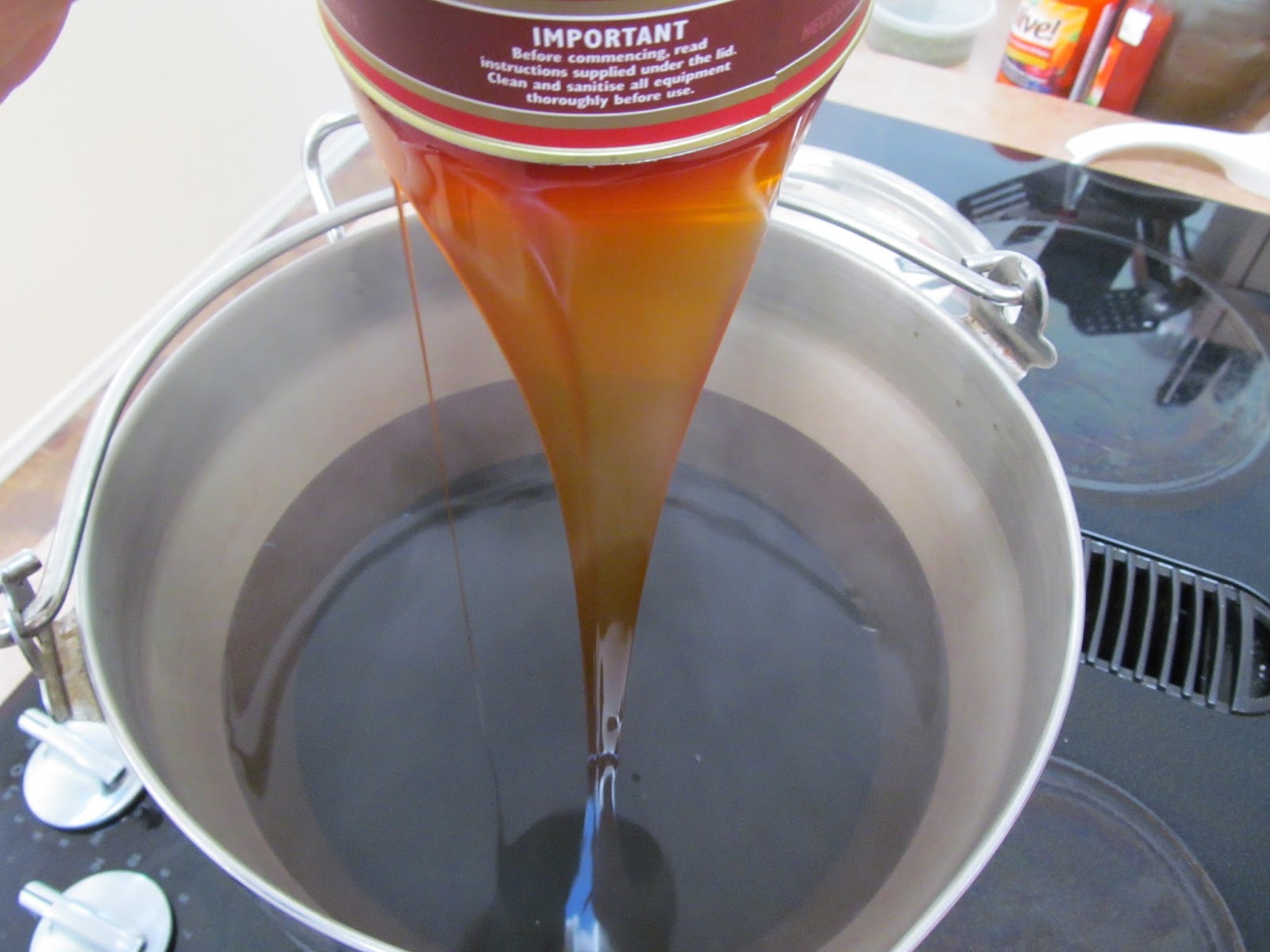
So I bought a tin.


That's probably where I went wrong.  Short cuts.  But I'm not yet ready to invest in a from-soil method of brewing.  The timing just isn't right.


I followed the instructions on the back of the tin.


I got something that smells like beer but tastes like old socks.  It's good enough to cook with, but not much else.

Maybe homebrew beer from a tin is not for me.  Maybe I should just stick to cooking and brewing apple cider... or maybe an opportunity will present itself in the future, encouraging me to try again.  Maybe I'll call it divine intervention, or perhaps I'll call it a happy circumstance.  


On a different note, I was asked recently is the Flying Spaghetti Monster made from whole wheat pasta or white pasta?  Although we cannot know the true nature of the divine, our minds being limited by our experiences in this world and lacking the necessary enlightenment to understand the composition of the divine, I can only say this: You cannot make white flour without starting from the whole grain.  So even white flour contains a kernel of the true nature of god.  (apologies for the excessive corniness.)